Written by: Sarah Jarvie
When an injury occurs, the most common instinct is to hit pause on everything. A lot of people pull back from the gym, cancel their regular classes, and wait on the couch until the pain disappears.
While protecting a fresh injury is essential, complete rest is rarely the best path to recovery. In fact, stopping all movement often leads to lost strength, joint stiffness, and a much harder road back to the activities you love. In Physiotherapy, we take a different approach. Train what you can while protecting what needs to heal.
The Hidden Costs of Complete Rest
Resting an aggravated area for a few days makes sense, especially right after an acute strain or sprain. However, shutting down your entire routine for weeks comes with real downsides:
● Rapid muscle loss. Muscles and tendons lose strength and load tolerance quickly when they are completely unloaded. When you eventually return to loading with daily tasks, activities or sport, your tissues are less prepared to handle the stress.
● Increased stiffness and sensitivity. Lack of movement reduces blood flow to healing tissues and can make your nervous system more sensitive to pain.
● Development of secondary pain sites. Being sedentary can lead to other areas becoming painful. Neck and back pain often develop with prolonged inactivity or when we are in the one position too long and back pain is especially common in people that have to use crutches as part of their recovery.
● Loss of overall fitness and negative effects on mood. Stepping away from exercise drops your cardiovascular fitness and removes one of the best natural tools for managing stress and pain.
How Safe Movement Speeds Up Healing
Your body is designed to adapt to mechanical load. When applied safely, movement acts like medicine for injured tissues:
● Boosts circulation. Gentle, safe, well timed, pain-free cardio or mobility work pumps oxygen and nutrient-rich blood into the injured area to support tissue repair.
● Stimulates tissue resilience. Controlled, progressive loading tells muscles, tendons, and ligaments how to lay down strong, organized fibers as they heal.
● Helps maintain uninjured areas. Rest may be necessary for your injured body part but complete rest will have negative consequences on other tissues and areas of your body. We need to keep muscles strong and joints moving around your injury.
● Helps maintain injured areas. Thanks to a neurological phenomenon known as the cross-education (or crossover) effect, strength training your uninjured limb can actually help preserve strength on the injured side.
Practical Ways to Protect the Injury While Moving
Staying active does not mean pushing through pain or ignoring your body’s warning signs. It means modifying how you move so the injured structure stays safe.
1. Modify the Movement, Not the Habit
For example; If running flares up your painful knee or Achilles, you could swap it temporarily for low-impact options like cycling, swimming, or walking alongside your rehab exercises. If heavy gripping aggravates an elbow issue, use lifting straps, focus on upper limb exercises that avoid gripping or switch to lower-body strength work while the tendon settles. Maintaining the habit of exercise (in whatever form you can) has great benefits on your overall health, social engagement and mood.
2. Train Around the Injury
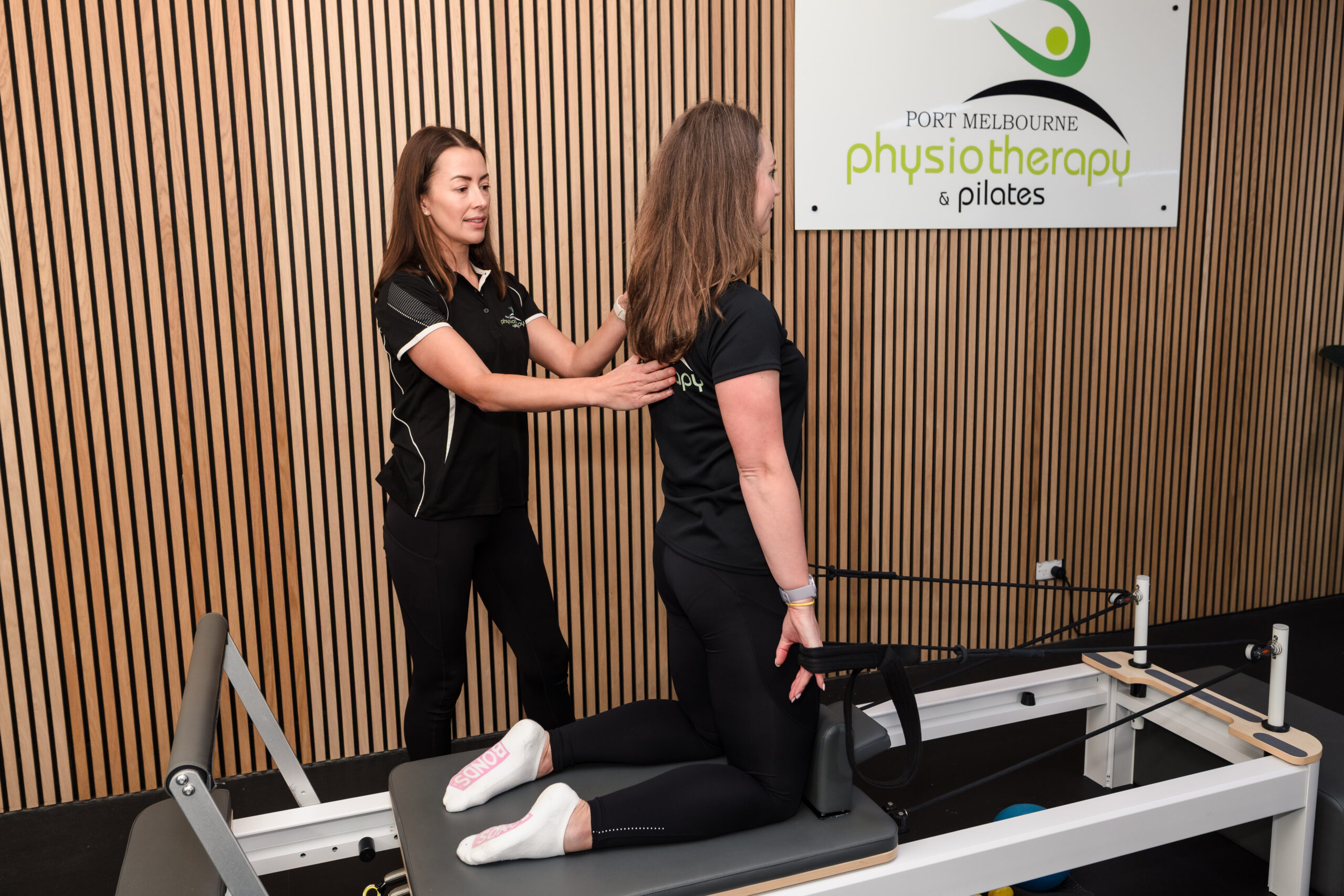
An upper-body injury is a great window to build lower-body strength and core stability. A lower-limb injury still leaves plenty of room for seated upper-body training, mobility work, and targeted rehabilitation exercises. Those of you who join us in the studio have probably seen people training while in a moonboot, wrist splint or sling. Our Physios are great at providing you with alternative exercises while injured to keep you moving and feeling good.
3. Use Pain as a Guide
During safe rehabilitation, mild discomfort (often rated up to a 2 or 3 out of 10) is generally acceptable, provided it settles quickly and does not leave you stiffer or in more pain. Severe, worsening, or lingering pain is a clear sign to scale back. (Please note: there are types of injuries that require complete rest such as fractures and bone stress injuries and we tolerate no pain at all- always consult your Physiotherapist for advice)
How Physiotherapy Helps You Find the Sweet Spot
One of the hardest parts of recovering from an injury is often knowing how much is too much and how little is not enough. A Physiotherapist will assess your injury, identify the exact movements that irritate it, and will build a tailored plan around your goals.
Together, we find that productive sweet spot. Protecting the tissue while promoting healing and keeping the rest of your body strong, confident, and moving forward.
Dealing with an injury and unsure what exercises are safe? Book an appointment with our Physiotherapy team today so we can help you stay active and recover with confidence.